Showing posts with label Crème Fraîche. Show all posts

Saturday, March 10, 2018

Alcoholic Pasta

A complex yet comforting dish. Because they're roasted the texture of the mushrooms becomes more dense and meaty while the earthiness of the flavour sweetens. The sauce, generally pretty light, is perfumed by the alcohol and you'll swear there were herbs added to it.

Part 1 - the mushrooms
18oz mushrooms, thickly sliced in 4 pieces
2 Tbsps olive oil
Generous pinch of salt
Generous pinch of black pepper

Part 2 - the sauce
2 Tbsps olive oil
2 Tbsps (1oz/28gr) butter
1 large onion, diced
¾ cup dry white wine
½ cup whiskey (Jack Daniels is fine)
¼ cup chicken broth
¾ cup heavy cream or crème fraîche
¾ tsp salt and pepper, to taste

Part 3 - combining it all
9oz chunky pasta such as penne, cooked al dente
  1. Preheat oven to 375°F. Put the mushrooms in a single layer on a cookie sheet and drizzle with the olive oil, then sprinkle with salt and pepper. Roast for 30 to 40 minutes, or until golden brown and the liquid the mushrooms sweat while cooking has completely evaporated. Set aside.
  2. In a large pot, heat additional olive oil along with the butter over medium heat. Throw in the onions and saute until beginning to turn translucent. 
  3. Pour in the wine and whiskey and allow to bubble for a minute or two. 
  4. Pour in the broth and allow the liquid to reduce by a quarter cup. 
  5. Stir in the cream and reduce the heat to low. 
  6. Add the mushrooms, salt, and pepper, and gently simmer to avoid any curdling, until the sauce thickens.
  7. Toss in the cooked pasta, using a little hot pasta water if the sauce needs thinning. Taste for seasonings and serve immediately.

Wednesday, November 16, 2016

Velouté of Turnips

What? Yes, that's right, a cream of turnip soup that even turnip-dislikers will enjoy. Just to be clear, a turnip is small and has white flesh. Often in grocery stores I have see either large, powerful tasting turnips or even large rutabagas (which have yellow flesh) labelled as 'turnip'.

1 leek (6oz/170gr) chopped fine
½ cup (4oz/114gr) butter
2lbs small turnips peeled and diced
4 cups chicken stock (veg stock for vegetarian)
1 cup crème fraîche
¾ to 1 tsp salt
¼ tsp pepper
  1. In a soup pot, saute the leek in the melted butter at a very low temperature, so that you're pretty much poaching the leek in the butter. Poach until completely soft.
  2. Meanwhile bring the stock to a boil and put in the diced turnips. Set to simmer.
  3. When the turnips are thoroughly cooked, dump in the leek and butter, the crème fraîche, the salt and pepper.
  4. Blend, season, and pass through a strainer.
  5. Adjust the thickness of the soup with whatever liquid remains in the pot.
  6. Serve hot with fresh snipped chives.

Wednesday, September 28, 2016

Lentillette au porc salé (Lentils with salt porc)

This is one of my go-to recipes nowadays, it's so creamy and delicious. At the moment I can only get salt pork in the fall and winter months, which is fine since this is such a calorie-dense meal, it's meant for winter consumption.

Servings : 4

8 oz salt pork ⅔ cut in small cubes, ⅓ cut in matchsticks
1 onion, finely chopped
4 oz to 1 lb winter squash (or carrots or other firm, sweet veg)
1 ⅓ cup du Puy lentils
½ cup red wine
2 ⅔ cups beef or mutton stock
1 bouquet garni of 2 sprigs thyme, 2 bay leaves, 6 stems parsley (optional: 2 sprigs sage)
2 oz grated parmesan
¼ cup crème fraiche (or heavy cream)
Crusty bread, to serve.
  1. Blanch the pork for about 4 minutes to remove some of the saltiness. Pat dry and let cool enough to handle.
  2. Make the bouquet garni by tying together the herbs - also remove the leaves from the parsley stems, chop fine and set aside.
  3. Once the pork has cooled, chop into big matchsticks. 
  4. Cook the pork in a saucepan until starting to brown. Remove ⅓ and set aside. 
  5. To the remaining pork in the pan, add the onion and the squash and cook just until soft. 
  6. Add the lentils and continue cooking another 5 minutes, stirring constantly.
  7. Add the wine and allow it to evaporate completely.
  8. Add the stock and the bouquet garni, along with the parsley stems. Bring to a boil and then simmer, uncovered, until the lentils are cooked (about 30 minutes). 
  9. When cooked the lentils should still hold their form and not have become mush and most of the liquid in the pan should be gone.
  10. Remove the bouquet garni.
  11. Stir in the parmesan and the cream. Plate the lentils and garnish with the finely chopped parsley leaves, the bacon matchsticks, and some freshly ground black pepper.
  12. Serve with crusty bread and something fresh or vinegary like pickled beets.

Monday, September 26, 2016

Aligot (Sort Of) - Mashed Potato and Gruyère

Aligot is a dish from the monks of Aubrac, France, which features the humble potato and lovely cheese. The traditional cheese is a "Tome d'Aubrac"; I yet have to experience this cheese, but from online references, it appears that Gruyère cheese is a suitable substitute, and I do like my Gruyère! Apart from the cheese substitution, this is a completely bastardized version - I use a third of the cheese listed traditional recipes, which makes for cream mashed potatoes with a strong cheese flavour - oh, so good!

2 lbs potatoes (preferably old potatoes, which are best for mashing)
½ cup (4oz/114gr) butter
1 cup crème fraîche (for mildness) or Greek yoghurt (for a little tang)
⅔ cup grated Gruyère, about 2 oz (or 2 cups for traditional version)
½ tsp salt
¼ tsp pepper
1 clove garlic, pressed
  1. Peel and boil the potatoes until thoroughly cooked (about 12 minutes, depending on size). If you have a vegetable mill, run the potatoes through this, or press with a spoon through a sieve (you can add the butter and crème fraîche and do an initial mash to make the potatoes more liquid, which helps with this part if you're doing it by hand). Do not use a food processor - you'll end up with potato glue; a little texture is good in this recipe.
  2. (If you haven't already) Add the butter and crème fraîche.
  3. Put the potato mixture in a pan and slowly add the cheese, mixing constantly, until the cheese is all added.
  4. Meanwhile, add the salt, pepper and pressed garlic.
  5. Cook over low heat, stirring constantly, until the cheese has completely melted.
  6. (If using the traditional volume of cheese, cook until the mixture stretches in a thick rope when you lift the spoon out of the pan - this is the sign that it's ready. Do not overheat or heat too long as this effect will cease.)

The Day After
If you have leftovers, add an egg or two depending on how much you have, and shape into patties to fry up on the stove. You can also add flour at a rate of 1 part flour for every 2 parts Aligot; this helps the patty keep its shape when the butter and cheese in the dish heat up and melt.

Sunday, March 1, 2015

Cinnamon Hot Chocolate Tart

I seem to be on a bit of a Mexican flavouring kick recently. Not that I'm complaining! Spicy, rich, complex flavours are just fine by me. This makes such a lovely, smooth filling, with just a suggestion of chilli heat. And I like distinct foods that complement each other when eaten together, which is why I put the cinnamon in the crust.
NOTE: try replacing the heavy cream with crème fraîche; it makes for an almost mousse-like consistency.

Crust - must be completely cooled before using
1 cup (4oz/120g) flour
¼ tsp salt
1 Tbsp. (25g) sugar
¾ tsp cinnamon
½ cup (4oz/114gr) butter, cut into pieces
½ tsp vanilla
2 Tbsps + cold water

NOTE: The pastry needs time to cool in the refrigerator not once, but twice, for about 15 minutes each time, and then another 15 minutes to pre-bake in the oven, a total of about 45 minutes.
  1. Put the flour, salt, and sugar in a large bowl. Add the butter pieces and pinch with your fingers to create a crumb texture (it's like playing in sand).
  2. Make a well in the middle, and pour in the vanilla and water. Quickly work in the flour to create dough. Do not over-mix. 
  3. Pat into a thick disk, wrap in plastic, and refrigerate 15 minutes.
  4. Roll out the dough, line the tart shell, and chill another 15 minutes.
  5. Pre-heat the oven to 400°F.
  6. Put baking weights in the shell and bake for about 15 minutes or until the crust is ever-so-lightly browned.
  7. Cool completely before using to allow the crust to set.
Filling
6 oz (170g) 70% chocolate, chopped fine
1 cup (250g) heavy cream
½ cup (120g) milk
1 tsp vanilla
¼ cup (50g) sugar
⅛ tsp cayenne
3 egg yolks
  1. Heat the oven to 325°F.
  2. Bring the cream and milk to a very slow boil in a saucepan.
  3. Remove from the heat and add the vanilla and the chopped chocolate, stirring to melt the chocolate completely.
  4. In a bowl, whisk together the yolk, sugar and cayenne until yolk turns a pale yellow.
  5. Very slowly whisk in the chocolate mixture into the egg mixture. Do this slowly; this is to gradually increase the temperature of the egg and avoid making scrambled eggs with the hot liquid.
  6. Strain the mixture into the baked tart shell.
  7. Bake about 35 to 40 minutes or until set. The pie will puff up a bit when it is cooked, and will settle again as it cools.
  8. Let it cool completely, which can take a few hours.
  9. Only once it is completely cooled, dust with cocoa powder. If you dust it before this, the surface will still be hot and damp and the powder will just get wet.
  10. Delicious accompanied by a fresh sprig of currants or other tart fruit.

Sunday, September 28, 2014

Velouté aux chanterelles - Wild Mushroom Soup

Our friend Lorenzo honoured us this weekend by bringing us to the spots where he picks wild chanterelle mushrooms. He informed us that it's a bit early in the season, but with his help we managed to harvest a little over a kilogram of the delicate flavoured beauties. Since they are specialty foods, and expensive, I've never cooked with them before, but I think this soup is a good starting place. It is mildly creamy, a little sweet, and gently mushroomy.

1 Tbsp (½ oz/14gr) butter
1 shallot, finely diced
2 tsps flour
2 cups chicken broth (veg broth for Vegetarian)
¾ cup white wine
2 Tbsps finely chopped fresh parsley
¼ tsp finely chopped fresh thyme
7 oz fresh chanterelles
½ cup milk
½ cup crème fraîche
¼ tsp salt
Pepper, to taste
  1. In a soup pot melt the butter and add the shallot and flour. Cook until the butter bubbles and foams and the flour starts to go blond.
  2. Add the chicken stock, white wine, parsley and thyme. Bring to a slow boil, then cover and gently simmer for 15 minutes.
  3. Meanwhile, shred the chanterelle mushrooms. At the end of the 15 minutes, add the mushrooms to the broth, and cook another 5 minutes. Bring to a slow boil.
  4. Low the heat to minimum. Add the milk, crème fraîche and salt. Gently simmer another 5 minutes.
  5. OPTION - at this point, you can either run the mixture in a blender for a velouté, or serve immediately with it all chunky.
  6. Before serving, grind some fresh black pepper on top.

Saturday, December 15, 2012

Asparagus Ementhal Quiche with Tarragon

1 blind baked pie crust, completely cooled
12 asparagus
6 eggs, beaten
1 cup crème fraîche
½ cup grated emmenthal cheese
1 tsp (0.02oz/4.7gr) butter
½ cup sliced mushrooms
1 garlic clove, minced
1 tsp fresh tarragon
1 small red pepper, julienned
salt and pepper
  1. You will need a need deep pie dish for this since the egg and cream mixture is quite plentiful.
  2. Heat oven to 350°F
  3. Blanch asparagus about 90 seconds in boiling water. Cool in ice bath and cut into ½" pieces.
  4. Fry mushrooms in a little butter, and add minced garlic for the last minute.
  5. Whisk eggs and cream, then add the grated cheese, mushrooms and garlic, and tarragon. Add asparagus and salt and pepper.
  6. Pour the mix into the blind baked pie crust.
  7. Bake for 20 minutes. Take out of the oven and add the julienned red pepper in a pleasing pattern on top. Return to the hot oven and bake an additional 30 to 40 minutes, or until the custard has set and the top has started to brown.
  8. To keep the quiche warm, cover it with aluminum foil and bake it in a preheated oven at 200-250F.

Monday, September 12, 2011

Potage Fontange (Mixed Vegetable Soup)

This is a soup which was eaten at Giverny, Monet's country home where grows to this day the garden that inspired so many of his paintings. I've leaped into the book Monet's Table once again and tried a couple more recipes. I've made substitutions to this soup just because some of the ingredients are a little challenging to find here - not impossible, just not at the grocery store nearby. I've indicated the substitutions as well as the original ingredients for the sake of keeping a record - my additions are in parentheses and italicized.

Part 1 - the peas
2 cups dried green or yellow (split) peas
Part 2 - the soup
2 Tbsps (28gr) of butter
1 onion (6oz/170g) thinly sliced
2 leeks (12oz/340gr) white parts only, thinly sliced
½ lb sorrel (or ½ lb spinach, plus 1 Tbsp lemon juice added later) trimmed and shredded
1 head iceberg (or romaine) lettuce (550g) trimmed and shredded (or 300g Swiss chard, thick midribs removed)
3 sprigs chervil (or 1 Tbsp finely chopped French tarragon or parsley), finely chopped
2 potatoes (16oz) peeled and cut in half (or quarters for a piece in each bowl)
6 cups rich beef broth (or any broth) or water
½ tsp salt
½ tsp pepper
Part 3 - the cream
TRY FROM This Google Search
2 egg yolks
1 cup crème fraîche, full fat yogurt or heavy cream (maybe just ½ cup?)
½ cup (4oz/114gr) butter, gently melted and allowed to cool 1 to 2 minutes
Bread to accompany the soup
  1. The split peas: Soak the dried peas in water for 2 hours (I put it in a pot and left it on the stove at the lowest temperature, just to keep the water hot but not boiling to make this go faster) then drain.
  2. The soup: In the meantime, melt 2 Tbsps of butter in the soup pot. Add the onion, leeks, sorrel (or spinach, not the lemon juice yet), lettuce (or chard) and chervil. Cook over low heat until the veg are well coated; do not let them brown.
  3. Add the split peas and potatoes, give it a good stir, then add the broth. Season with salt and pepper and bring to a boil. Cover and simmer gently for 60–120 minutes, or until the split peas are completely soft and beginning to break down.
  4. (If using spinach, add the lemon juice now). At this point you have two choices: 1) strain the soup (using a vegetable mill or forced through a sieve using a wooden spoon) or 2) keep it chunky where it's recommended you break up the potato with the back of a spoon and mix it in. Either way, you'll then need to make the cream, and for this you must...
  5. The cream: The purpose of this step is to enrich the soup with a classic French liaison — it will give the finished soup a velvety, rounded quality that sets it apart from a plain pea potage. 
    1. Beat the softened butter with a wooden spoon until it is completely smooth with no lumps.
    2. Beat the dairy and egg yolks together in a bowl. in the crème fraîche or cream a little at a time until fully incorporated, then beat in the egg yolks one at a time. 
    3. While whisking continuously, stream in the melted butter into the dairy/yolk bowl. The mixture should look uniform and creamy. 

    4. Place this cream either in a warmed soup tureen or divide it among individual bowls. NOTE: Your soup must be very hot when you pour it on top — ladle a small amount of the hot soup over the cream first, stirring it directly into the cream to begin warming it gradually, then pour or ladle the rest of the soup over slowly, continuing to stir as you go. This gradual approach warms the egg yolks gently without scrambling them, and brings the whole thing together into a rich, unified soup.
  6. Enjoy with crusty bread.

Thursday, August 4, 2011

Leeky Goat Quiche - Chèvre and Leek Quiche

One of my standard quiche recipes, I made this as a side-dish to my parent's catered 50th wedding anniversary, and was quite chuffed when it became the focus of the meal. I love it when people ask me for the recipe!

1 blind-baked pie crust, completely cooled
2 Tbsps (1oz/28gr) melted butter
2 to 3 scallions (45 to 60g)
1 (6oz/170gr) leek
3 eggs
1 cup crème fraîche
pinch nutmeg
4 to 5 oz chèvre cheese
½ tsp salt
1⁄4 tsp pepper
Optional: 1 Tbsp tarragon
  1. Pre-heat oven to 400°F and blind-bake the pie crust. Allow it to cool completely before using to allow the crust to set.
  2. While crust is baking, fry leek in butter until soft. Add the scallions and cook with the leeks for another 2 to 3 minutes, to wilt. Set aside.
  3. Whisk together egg, crème fraiche, nutmeg, salt and pepper (and tarragon, if using).
  4. Spread cheese in bottom of pie shell. Sprinkle fried leeks on top.
  5. Pour egg mix into shell; sprinkle fried scallions on top.
  6. Turn down the oven temperature to 350°F and bake for 30 to 40 minutes or until the custard is just set.
  7. To keep the quiche warm, cover it with aluminum foil and bake it in a preheated oven at 200-250F.

Sunday, April 3, 2011

Chicken with Mushroom and Leeks

The original to this recipe is in Food & Wine March 2011. It's called Simplest Chicken-and-Leek Stew. I think the name is misleading. To start, with the quantity of mushrooms in this recipe, this ingredient should be headlined, otherwise it's like calling a chocolate cake a sponge cake. Secondly, there are three different grouping of things to cook separately, and then you assemble, which means lots of dirty dishes and fiddling with removing from the pan and then putting back in. Thirdly, there is no stewing involved - all the ingredients are cooked separately, then added to the sauce with only a single measly minute of simmering before serving. The one thing that I will agree to about this recipe is that it is delicious.

2 Tbsps mild vegetable oil
2 medium leeks (12oz/340gr) tender parts only, thinly sliced
1⁄2 lb button mushrooms, thinly sliced
Salt and pepper
1 lb chicken breast cut into 2 inch pieces
4 Tbsps flour (I use rice flour)
1 1⁄2 cups chicken broth
1 Tbsp finely chopped fresh thyme
2 Tbsps crème fraiche
1 Tbsp Dijon mustard
  1. In a skillet heat 1 Tbsp oil, add leeks and cook over moderate heat until soft (approx 7 minutes). Add the mushrooms, season with salt and pepper. Cover and cook, stirring often, until mushrooms are soft, about 4 minutes. Remove from pan and set aside.
  2. In a bag mix 4 Tbsp flour, salt and pepper, and toss in chicken pieces. Shake until chicken is well covered, remove chicken and discard remaining flour. Add 1 Tbsp of oil to pan and the brown chicken, about 2 minutes per side. Add the chicken stock and thyme, simmering until chicken is cooked through (this should be quick since the browning should have cooked the chicken).
  3. Remove the chicken from the pan and simmer the stock until it is reduced by half. Throw the chicken and veg back in and simmer over low temperature until it's all heated through, about 1 minute.
  4. Meanwhile, in a small bowl mix together the crème fraiche and the Dijon and stir into the stew. Season to taste and serve.

Sunday, February 6, 2011

Frosting to improve hips - Chocolate Buttercream Frosting

Yes, a butter frosting. Usually for this type of recipe an unsalted butter is recommended, but I like to use salted - I always find that salt improves flavour, even when it's a sweet. Although I have made this by hand, I prefer to use an electric mixer to cream the butter. All I'm saying is that, in a pinch, you can beat the butter with a wooden spoon by hand; it may in fact offset a bit the calories...
NOTE: you can choose how sweet you want your frosting by playing with the quantity of icing sugar. Two cups may be a bit skimpy and create a bitter-sweet chocolate frosting, but I find four cups way too sweet. I recommend you start at 2 cups and add to taste after that.
ANOTHER NOTE: It's best to sift light powders like cocoa and icing sugar after measuring - the measuring process can compact it again and cause it to lump.
YET ANOTHER NOTE: Notice that the darkness of the chocolate frosting will lighten depending on two things: 1) how much sugar you use and 2) how long and how vigorously you beat the mixture (especially if you use an electric mixer).

1 cup (8oz/228gr) softened salted butter
1⁄3 cup (2.8oz/78g)crème fraîche
1 Tbsp. vanilla
1 cup Dutch processed or de-bittered cocoa powder, sifted after measuring
2 to 4 cups (1 cup = 5.1oz/145g) icing sugar, sifted after measuring
  1. Beat butter until creamy (it will become pale, almost white).
  2. Blend in crème fraîche and vanilla; beat until very smooth.
  3. Add the cocoa and icing sugar.
  4. Beat on high until smooth, no longer than 45 seconds or depending on the colour you want.

Sunday, September 19, 2010

Blue Cheese and Fennel Quiche

I have my standard quiche recipe which more or less (less or more) follows the instructions I've mentioned in my earlier post for quick and easy quiches. I use a mild blue cheese called Bleu Claire from a local cheese maker - my niece came for dinner and she thought she didn't like blue cheese, so I made half the quiche with Gruyere, but slipped in a sliver with blue, and she liked it. I agree that some blues have an overpowering flavour - unlike aficionados, I don't like the feeling of the cheese mould entering my sinuses from the blue. But the Bleu Clair has the flavour of blue cheese without the aggressiveness of the stronger types, perfect for blue-virgins and sensitives like myself.

1 pre-baked pie shell, completely cooled
2 Tbsps (1oz/28gr) butter
1 lb fennel, finely chopped
8 oz crumbled blue cheese or grated Gruyère
Optional: handful of toasted walnuts
5 eggs (3 eggs and 2 egg yolks)
1 cup cream or crème fraîche
salt and pepper to season
  1. Melt the butter and sautée the fennel until it starts to brown and is soft. The fennel will not cook while the custard is baking, which means it has to be thoroughly cooked in the pan.
  2. Meanwhile, mix the eggs and cream together and season the mixture with salt and pepper.
  3. Layer the fennel at the bottom of the baked pie crust, then layer with the cheese of your choice (and toasted walnuts if using).
  4. Pour egg mixture over the filling. Bake the pie at 375°F for 25-30 minutes, or until the filling is set.
  5. To keep the quiche warm, cover it with aluminum foil and bake it in a preheated oven at 200-250F.

Tuesday, June 15, 2010

Chicken Leftovers Pot Pie

What to do with bits of cooked chicken other than slapping them into a sandwich? Slap it in a pot pie! Even there is no stuffing in this pie, there it has a flavor similar to it, and it has just the right amount and quality of gooey sauce inside. I've made this almost as many times as I've made roast chicken. Which is often. 

1 small potato, diced
1 small onion, diced
1 stalk celery, diced
1 carrot, diced
1/4 cup (2oz/58gr) butter
1/4 cup flour
2 tsp. fresh thyme, minced
1 cup chicken broth
½ cup crème fraîche
1 teaspoon salt
1/4 tsp. pepper
2 heaping cups chicken, cooked and chopped
2 batches of pie crust, uncooked
  1. Preheat oven to 400°F.
  2. Sauté onion, celery, carrots and potatoes in butter until cooked through and starting to brown, about 10 minutes.
  3. Add flour to sautéed mixture, stirring well. Cook one minute, at least, or until well browned. This is important - cooking the flour in the buttered vegetables means the flour is absorbing all the liquids and fats in the pan, then cooking so that when you make the sauce, it will have carried all the lovely browning flavour with it, and it won't taste floury.
  4. Combine the broth and the crème fraîche. Dump into the vegetable mixture and stir thoroughly. Stir in the thyme, salt and pepper. Cook over medium heat stirring constantly until the broth thickens and gets bubbly. If you feel you haven't browned the flour mixture enough, it's not too late. Leave on a high simmer and let cook a bit more.
  5. Mix in the chicken and stir to combine well.
  6. In a shallow pie pan lined with uncooked dough, pour in the chicken mixture and top with the remaining pie dough. Cut slits in the crust to allow steam to escape. Bake for 40-50 minutes or until the pastry is golden brown and the filling is bubbly and heated through.

Sunday, June 13, 2010

Chocolate Cakes in a Jar

A new picnic idea! I found a recipe for chocolate cake baked into a jar. At first I thought it must be some sort of fancy, special method, but after reading the recipe, I realize that it's just a chocolate cake batter baked in canning jars. I still have to check, but, like making cupcakes, the cooking time is probably a bit different.
What this means is that I can bake all sorts of things in jars and oven-proof containers that would fit in the picnic baskets. This is very exciting. It's like an extra wow factor to the picnics - baked in this way, they are specifically made just for YOUR picnic, my lord and lady, not just slopped into containers from a democratic mass.

Ten to twelve ½-pint canning jars

½ cup (4oz/114gr) butter, softened
1½ cups packed light brown sugar
2 large eggs
1 teaspoon pure vanilla extract
6 tablespoons unsweetened cocoa powder
1½ teaspoons baking soda
1/4 teaspoon salt
1½ cups sifted all purpose flour
2/3 cup crème fraîche
2/3 cup brewed coffee (I just use the morning’s leftover coffee)
  1. Preheat the oven to 350F. Place 10 to 12 ½-pint glass canning jars on a rimmed baking sheet, evenly arranged with space between them.
  2. To make the cakes, in a mixer fitted with a whisk attachment, beat the butter until smooth. Add the brown sugar and eggs and mix until fluffy, about 2 minutes. Add the vanilla, cocoa, baking soda, and salt and mix until combined. Add half of the flour, then half of the crème fraîche, and mix until combined. Repeat with the remaining flour and crème fraîche. Drizzle in the coffee and mix until smooth. The batter will be thin, like heavy cream.
  3. Pour the batter into the jars, filling them halfway. Bake until the tops of the cakes are firm to the touch, about 25 minutes.
  4. A topping is a good idea for presentation. Delicately sprinkle some powdered sugar and add a centre-piece like a nut or a piece of fruit or something extra-special like a candied flower. I was also wondering if a layer of some sort of clear jelly would look good and add a flavour dimension to the cake.


Tuesday, April 20, 2010

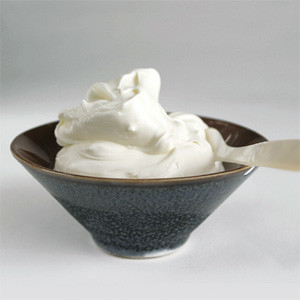
Crème Fraîche


Several French recipes ask for crème fraîche, but it is difficult to find, expensive, and (apparently) not as good as what is available in Europe. So I've learned how to make it. Essentially it is a culture. I suspect it is mimicking the fresh cream we would get from Jean-Paul and Georgette when I was a boy - we'd laugh at my dad and be disgusted that he'd eat what we called 'crème sûre', or soured cream, i.e.: cream that had gone off. Now I realize my father has gourmet appetites, as he was eating crème fraîche, while I denied myself the pleasures of this mild, rich food for the sake of what I thought was 'gross'. So now I'm making up for lost time. Since unpasteurized cream is no longer legally available in Canada, it's possible to mimick the natural process by adding culture from butter milk.

 
1 cup heavy cream
2 Tbsp. (or more) buttermilk
  1. Pour the cream and buttermilk in a glass jar with the lid just resting on top and not screwed down.
  2. Leave it on the counter for 24-48 hours, shaking the jar whenever you think of it. Do not refrigerate it at this point! Refrigeration dramatically decreases the bacterial activity of the cultures that transform the cream into crème fraîche.
  3. The cream will become very thick, and you will have to shake it more and more vigorously as it thickens. If you don't shake the jar, the cultured part on top will seal off the liquid cream at the bottom and you'll have an uneven culturing, the top super thick and the bottom just plain liquid cream.
  4. Once it's reached the thickness you like (from stirred yogurt to thick mascarpone in texture) put it in the refrigerator and it will keep for about two weeks. Just keep in mind that, even in the refrigerator, the culture, as a living organism, will continue to thicken the cream.
  5. I've taken to simply adding more cream when the crème fraîche starts to run down instead of using more buttermilk. If the crème fraîche has been unused in the refrigerator for a long time, I give it a sniff test and if it smells bad, I dispose of it and start fresh again.

Monday, April 19, 2010

Tarragon Chicken

Ok, so I've made another Laura Calder recipe. So what? And no, I'm not defensive about it... much. I might as well admit it, I think she's great and I will likely be making a lot of her recipes. It's actually really unusual for me to glom onto one food writer, but, well, there you go! I have!
I tried, for the first time, her Tarragon Chicken recipe, but I altered it without considering the alterations. I used skinned and boned chicken breasts I'd cut into chunks because I wanted more of a stir-fry kind of dish. Well, I overcooked the chicken, although the sauce turned out very nicely. I can still use skinless and boneless chicken breasts, I just have to make sure I use the right cooking techniques for it before applying the sauce.
NOTE: If using CHICKEN BREASTS, follow the instructions for sautéeing chicken breasts and make the sauce as directed. Do not cook in the liquid for 30 minutes - cook breasts using the sauté method and make the sauce to pour on top.

1 Tbsp (1⁄2 oz/14gr) butter
1 Tbsp vegetable oil
1 chicken (about 3 pounds/1.4 kg), cut into 8 pieces
Salt and pepper
1⁄2 cup chicken stock
3⁄4 cup dry white wine
1 shallot, minced
1 cup crème fraîche
1⁄2 cup chopped fresh tarragon
Lemon juice to taste
  1. Melt the butter with the oil in a large skillet over quite high heat. Season the chicken pieces and fry in batches until well browned, about 5 minutes per side.
  2. Put all the chicken back in the pan, add the chicken stock and reduce the heat to medium. Cover and cook until tender, about 30 minutes - the internal temperature of the breast should read 165F. Remove the chicken to a plate and keep warm.
  3. Keep cooking the leftover juices and reduce until sticky - the correct moment of reduction can be heard, it's like making ghee, just listen to the sauce and when the sound changes, wait a few seconds longer and it's ready.
  4. Add the shallot and wine and reduce to a thickish sauce, about 5 minutes. Add the cream and half the tarragon. Boil down again until it thickens into a sauce, about 3 to 5 minutes.
  5. Season the sauce with salt, pepper, and lemon juice. Put the chicken pieces back in, turning to coat, then transfer to a platter. Pour the sauce over the chicken, joyfully scatter over the remaining tarragon, and serve.

Monday, April 12, 2010

Italian Sausage Pie or, What to eat when you're bumed

Yesterday we came home from a beautiful spring day to find that our kitchen window had been forced open and our computers stolen (I'm uploading this post on an ancient laptop that has already crashed three times, won't work if you put in the battery, and needs its belly rubbed before going the sleep!) There's the inconvenience of losing computers and the danger of personal information on them falling into the wrong hands, but what is even more disturbing to me is that they entered through the kitchen - my sanctuary, the space from where I make my home... homey. And on top of that, my entire repertoire of recipes that I'd altered to my liking are gone. Gone!
Ah, well, I don't want to stay with these feelings, so a little comfort food will help, not just to eat, but to make, to fill my desecrated sacred space with warm, appetising aromas, to welcome light back into our home. I now have the opportunity to rebuild, rediscover and re-invent.
An old favourite is Italian Sausage Pie, a recipe I found on Recipezaar that is both delicious and comforting.

1 pie shell, blind baked, completely cooled
3/4 lb Italian sausage, sweet or hot
1 Tbsp. olive oil
1 small onion
3 eggs
1/2 cup crème fraîche, cream or milk
1 cup shredded mozzarella or Gruyère
Salt and pepper to taste
  1. Before turning on the heat under a skillet, add the oil and the onion. Remove the casing from the sausage and break up into crumbles in the skillet.
  2. Turn on the heat  and cook until the onions are soft and the sausage starts to brown. This is usually when most of the moisture from the sausage has evaporated. Drain any excess fat and  and spoon this mixture into the blind baked pie shell.
  3. Meanwhile, in a bowl, beat together the eggs and the cream, then mix in the cheese, salt and pepper; pour this over the sausage mixture.
  4. Bake at 350F for 35 minutes, or until the custard sets and it tests clean with a knife.
  5. Allow the pie to cool a few minutes before serving.
  6. To keep the quiche warm, cover it with aluminum foil and bake it in a preheated oven at 200-250F.

Thursday, April 8, 2010

Lemon Cream Pie


The universe has conspired to force me to write about Laura Calder's Lemon Tart. I've made it a few times now and it just seems to be improving every time. The recipe's been sitting on my computer for days, but I always had other things to write about. My experience today was a clear sign from the Divine Heavenly Chef that good things need to be recognised.
This morning, when I left to go to work, there was some left over from the night before. Throughout the day I'd think about having a piece when I got home as a snack, with some of the strawberry cream I'd made to go along with it. Waiting for me, on the kitchen counter, was the empty pie plate and some crumbs and a dirty fork. My husband Ben had decided to snack on the same delicacy I'd been day-dreaming about all day! Below is the recipe. I haven't changed a thing because it's perfect as it is, although, like Laura, I like my lemon tarts, well, tart. Add more sugar if you prefer yours sweet.
Now, I call this a pie because I bake it in a pie dish (which has sloped sides). You can choose to bake it in a tart dish (straight or square sides), but I don't recommend you bake it as a galette (dough folded over the edge of the filling and baked on a cookie sheet) since the custard is likely too liquid to hold the shape.

1 recipe for Cookie pie crust, blind baked, completely cooled
2 whole eggs
4 egg yolks
3/4 cup sugar (155g) more to taste
3/4 cup lemon juice
2/3 cup crème fraîche or heavy cream
  1. Heat the oven to 325ºF. 
  2. Beat together the eggs, yolks, and sugar in a bowl. 
  3. Add the lemon juice.
  4. Whisk in the cream.
  5. Strain into the shell.
  6. Skim off any surface foam, and pop any bubbles.
  7. Bake until just set, about 30 minutes or until the center sets. Let cool before serving.

NOTE: The first time I made this was for Valentine's day, and I cut the pie with heart-shaped cookie cutters. It was very pretty, but I hadn't thought it out - the cookie cutters are old tin ones (very wabi sabi) and reacted with the lemon in the tart to give it a metallic taste. The moral is that it is a good idea to use the tart to cut out cute shapes, but make sure that the cookie cutters are made of non-reactive material.